Canada Day is just around the corner, and what better way to celebrate this vibrant tapestry of a nation than with the music that defines our rich cultural heritage?
Music is a powerful conduit for fostering a sense of belonging, and celebrating communal identity. It fosters understanding and empathy, recognizing the shared experiences and emotions that bind us all together. May this Canadian music heal and enhance your celebration of the culture and heritage of this glorious country in which we live.
Your family may enjoy the music over several days leading up to Canada Day.
If my people who are called by my name humble themselves, and pray and seek my face and turn from their wicked ways, then I will hear from heaven and will forgive their sin and heal their land. 2 Chronicles 7:14 Nova Scotia Youth Ambassadors travel to Williams Lake, BC
National treasure – the Leahy Family shares their musical talent. If you don’t know them, here is a great write-up of this homeschooling, travelling family of nine.
This classic song, familiar to parents but perhaps not the children, should be carried on through generations.
This is an old folk song sung by woodworkers, and details them returning to their homes and families after having left for the un-colonised areas of Canada where they chopped wood. Lyrics here
This campfire song brings to mind the Indigenous Peoples travelling by canoe across the land, in years past, and the fur traders who opened the land to trade. A favourite!
Featuring British Columbia’s First Nations Alex and Daniel Wells who are members of Lil’wat First Nation, north of Whistler. Alex Wells is x3 times world champion hoop dancer and travels the world to perform.
The Nova Scotia Youth Ambassadors perform folk fiddle tunes “Inisheer” by Thomas Walsh and “Road to Errogie” at Crystal Crescent Beach, Nova Scotia.
Nunavut is the newest, largest, and most northerly territory of Canada. It was separated officially from the Northwest Territories on April 1, 1999. Nunavut comprises a major portion of Northern Canada, and most of the Canadian Arctic Archipelago. Its vast territory makes it the fifth-largest country subdivision in the world, as well as North America’s…
From west to east, Canada’s six different time zones are: Pacific, Mountain, Central, Eastern, Atlantic and Newfoundland. Up to the 1880s, cities and towns used their own local solar time which could vary from place to place. That was fine when people didn’t travel far, but once the railways allowed quicker travel over long distances,…
British Columbia is the westernmost province of Canada, located between the Pacific Ocean and the Rocky Mountains. It has the mildest weather of all the provinces in Canada, often with very rainy winters. The landscape is stunning, from coastal beaches to mountain vistas. In 1866, Vancouver Island became part of the colony of British Columbia,…
St. Patrick’s Day, the holiday commemorating Saint Patrick and the arrival of Christianity in Ireland, has long been a part of Canadian history. Enjoy the St. Patrick’s Day themed crafts and activities below!
Take a look at the interesting things this prairie province has to offer! Saskatchewan is a prairie and boreal province in western Canada, the only province without a natural border. Saskatchewan is a landlocked province with large distances to moderating bodies of waters. As a result, its climate is extremely continental, rendering severe winters throughout…
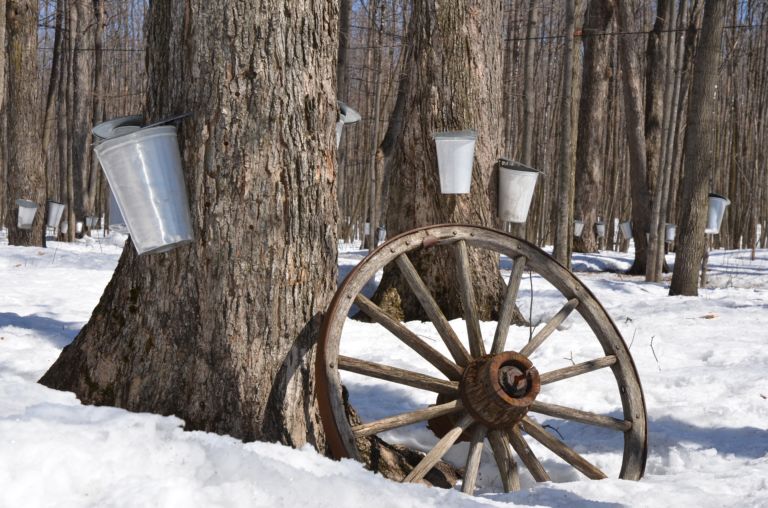
March is the month the maple syrup flows. Canada is known for our maple syrup-gifted to us from our First Peoples! Join the Quad Squad as they visit a farm in Ontario to see how maple syrup is made.A family of Attikamek First Nations show a French Canadian family how to harvest the syrup of…